

Close Menu
Flat Living
    Facebook X (Twitter) Instagram
    • Home
    • About Us
    • Flat Living Sponsorship
    • Get In Touch
    • Directory
    • Subscribe
    LinkedIn Facebook X (Twitter) Instagram
    Flat Living
    • Block Management
      • Manage Your Block
        • Self Manage
        • Using a Managing Agent
        • Right to Manage
        • Forming a RMC
        • Managing Listed Flats
        • Communal Areas
      • Lease
        • About Your Lease
        • Buying Your Freehold
        • Extending Your Lease
      • Service Charges
        • About Service Charges
        • Service Charge Accounting
        • Collections and Arrears
        • Section 20
      • Health & Safety
        • Asbestos – Air – Water
        • Employing Contractors
        • Fire Protection
        • Fire Regulation
        • Health & Safety Law
      • Insurance
        • Buying Insurance for Your Block
        • Insurance Risk Management
        • Reinstatement Cost Assessment
        • Insurance for Communal Areas
        • Water Damage Prevention
        • Insurance for Buy to Let Landlords
        • Directors & Officers Liability Insurance
        • Making a Claim
      • Disputes
        • Landlord Disputes
        • Neighbour Disputes
        • Property Disputes
      • Major Works
        • About Major Works
        • Party Walls and Neighbour Matters
        • Section 20
      • Cleaning & Maintenance
        • Cleaning
        • Grounds
        • Maintenance
      • Communal Facilities
        • Lifts
        • EV Charging
        • Door Access and Gates
        • Heating & Utilities
        • Lighting
        • TV and Telecoms
      • Emergencies
        • Break-Ins
        • Lift
        • Out of Hours
        • Roof
        • Water
      • Software
      • Case Law
      • Customer Service & Marketing
      • FAQ
    • Leaseholders
      • Manage Your Block
        • Self Manage
        • Using a Managing Agent
        • Right to Manage
        • Forming a RMC
        • Managing Listed Flats
        • Communal Areas
      • Lease
        • About Your Lease
        • Buying Your Freehold
        • Extending Your Lease
      • Service Charges
        • About Service Charges
        • Collections and Arrears
        • Service Charge Accounting
        • Section 20
      • Disputes
        • Landlord Disputes
        • Neighbour Disputes
        • Property Disputes
      • Major Works
        • About Major Works
        • Party Walls and Neighbour Matters
        • Section 20
      • Communal Facilities
        • Lifts
        • EV Charging
        • Door Access and Gates
        • Heating & Utilities
        • Lighting
        • TV and Telecoms
      • Software
      • Landlords
        • Buying a Flat
        • Letting a Flat
        • Selling a Flat
      • Emergencies
        • Break-Ins
        • Lift
        • Out of Hours
        • Roof
        • Water
      • FAQ
    • Lifestyle
    • News
      • Industry News
      • Interviews
      • Opinion
      • Jobs
      • Flat Living Back Issues
    • Events, Training and Jobs
      • Events
      • Training
      • Jobs
    • Block Services
      • Flat Living Directory
    • Industry Associations
      • ARMA
      • ARHM
      • ALEP
      • FPRA
      • IRPM
      • Leasehold Advisory Service
      • Property Redress Scheme
      • National Leasehold Group
      • RICS
      • The Property Ombudsman
    Flat Living
    Home » Emergency Lighting in Residential Blocks: Understanding the Growing Importance of Photometric (LUX) Verification

    Emergency Lighting in Residential Blocks: Understanding the Growing Importance of Photometric (LUX) Verification

    0
    By Future Group on January 27, 2026 Communal Facilities, Door Access and Gates, Emergencies, Health and Safety, Industry News, Lighting, News

    By Jordan Begg
    Co-Founding Director – Future Group of Companies

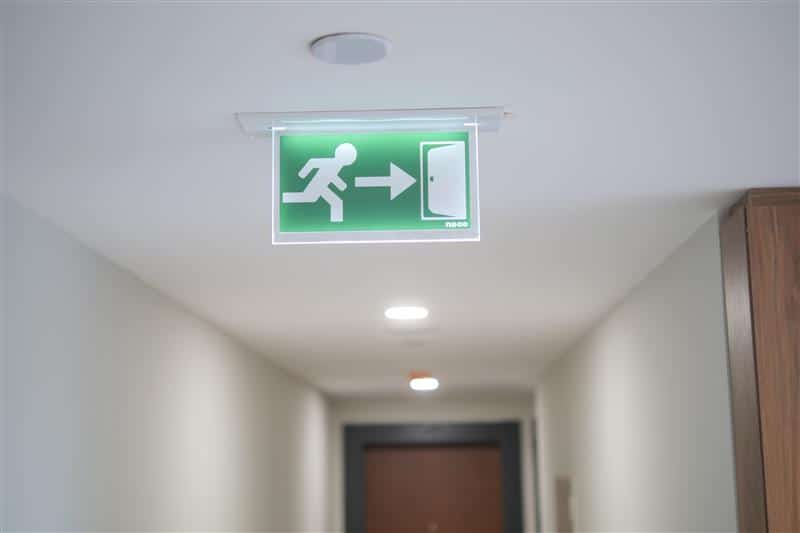
    Emergency lighting in residential buildings has long been a fundamental life-safety provision, particularly within communal areas such as corridors, stairwells and lobbies. Historically, compliance has centred on ensuring that emergency luminaires operate during a power failure, supported by routine monthly functional tests and annual full-duration testing.

    Recent updates to UK and European emergency lighting standards reflect a clear shift in emphasis. The focus is moving beyond basic functionality toward demonstrable performance – specifically, whether emergency lighting systems continue to deliver adequate illumination levels in real-world conditions over time.

    From “does it switch on?” to “does it still perform?”

    Routine monthly and annual testing remains essential and continues to form the backbone of emergency lighting maintenance. These tests confirm that fittings illuminate on loss of supply and remain operational for their rated duration. What they do not confirm is how much usable light is actually delivered to escape routes.

    Over time, the performance of emergency lighting systems can degrade for a variety of reasons. LED light output reduces gradually, batteries age, diffusers discolour, and building environments change. Doors are replaced, corridors reconfigured, and finishes altered. As a result, systems that once met design expectations can quietly fall below current performance benchmarks without any obvious functional failure.

    Full-width escape route illumination

    Current guidance places greater importance on assessing illumination across the full usable width of escape routes, rather than relying solely on centre-line measurements. In residential blocks, this distinction is particularly relevant in communal corridors and stairwells that include alcoves, door recesses, changes in width, or variations in layout.

    In practical terms, this means that emergency lighting systems which appear compliant during routine testing may still provide insufficient illumination at the edges of escape routes — areas where trip hazards, door thresholds and changes in direction commonly occur.

    The role of five-year photometric verification

    Alongside existing testing regimes, there is now a growing expectation for periodic photometric verification, often referred to as a LUX survey. This process involves measuring light levels at floor level while the emergency lighting system is operating in emergency mode, to confirm that illumination remains adequate across escape routes.

    Photometric verification does not replace monthly or annual testing. Instead, it provides a deeper assessment of system performance and is typically recommended at least every five years, or sooner where buildings have undergone alterations, systems are ageing, or concerns have been identified through fire risk assessments or audits.

    Crucially, this approach allows issues to be identified proactively. In many cases, verification confirms that systems remain adequate. Where shortcomings are identified, it enables responsible persons and managing agents to plan improvements in a controlled and proportionate way, rather than responding reactively to compliance findings.

    Implications for residential block management

    For those responsible for residential buildings, the message is one of awareness rather than alarm. Existing testing regimes remain valid and necessary, but they may no longer provide a complete picture of system performance. Understanding whether emergency lighting continues to perform as intended is becoming an increasingly important part of demonstrating due diligence.

    Reviewing whether a building has ever undergone photometric verification, and considering how changes over time may have affected lighting performance, is a logical next step for many communal systems.

    A practical view from the industry

    From my perspective, the most important thing for managing agents and responsible persons to recognise is that these changes are not about creating additional burden. They are about gaining clearer visibility of how emergency lighting systems actually perform over time.

    Photometric verification does not automatically indicate non-compliance, nor does it suggest that existing systems are inadequate by default. What it provides is evidence – enabling informed decisions to be made based on measured performance rather than assumption. In many cases, it confirms that systems remain suitable; in others, it highlights areas where relatively modest improvements can significantly enhance safety and resilience.

    As expectations continue to evolve, the ability to demonstrate that systems not only operate, but continue to meet their intended purpose under real conditions, is becoming increasingly important across the residential sector.

    If you are unsure how photometric verification applies to your buildings, or whether your existing emergency lighting arrangements remain appropriate, seeking competent technical guidance can help provide clarity. At Future Group, we support managing agents and building owners by explaining these requirements in practical terms and helping them understand what, if anything, needs to be reviewed within their communal areas.

    Author: Jordan Begg
    Co-Founding Director – Future Group of Companies

    future group industry news lighting News
    Share. Facebook Twitter Pinterest LinkedIn Tumblr Email
    Future Group

    The award-winning Future Group collaborates with the property management industry to provide top-tier, energy-efficient, and fully compliant solutions. Our commitment lies in addressing the genuine requirements of the property and estate managers. We take pride in delivering innovative and competitive turnkey services across our five divisions. Future Group | 0203 826 9999 | [email protected]

    Related Posts

    Landlord and Leaseholder Complaints and Disputes – Causes and Practical Ways to Address Conflict

    Commitment to Transparency Is Reshaping Customer Service at FirstPort

    How to Respond to a Dispute and Manage Conflict

    Comments are closed.

    You are here:

    Home → Communal Facilities → Lighting

    Latest Articles
    January 27, 2026

    Emergency Lighting in Residential Blocks: Understanding the Growing Importance of Photometric (LUX) Verification

    January 27, 2026

    Landlord and Leaseholder Complaints and Disputes – Causes and Practical Ways to Address Conflict

    January 27, 2026

    Commitment to Transparency Is Reshaping Customer Service at FirstPort

    January 27, 2026

    How to Respond to a Dispute and Manage Conflict

    • Manage Your Block
    • Lease
    • Health & Safety
    • Insurance
    • Disputes
    • Major Works
    • Cleaning and Maintenance
    • Communal Facilities
    • Software
    • Landlords
    • Events, Training and Jobs
    • Customer Service & Marketing
    • Case Law
    • News
    • Interviews
    • Opinion
    About Flat Living

    Flat Living is a trading name of www.flat-living.co.uk Ltd.  Registered Office: 3rd Floor, St. David's Court, Union Street, Wolverhampton, WV1 3JE.

    Registered in England and Wales CRN No. 06738048.

    Quick Site Links
    • About Us
    • Contact Us
    • Industry Associations
    • Flat Living Sponsorship
    Search This Website
    • Home
    • Get In Touch
    • Cookie Policy
    • Privacy Notice

    Type above and press Enter to search. Press Esc to cancel.