


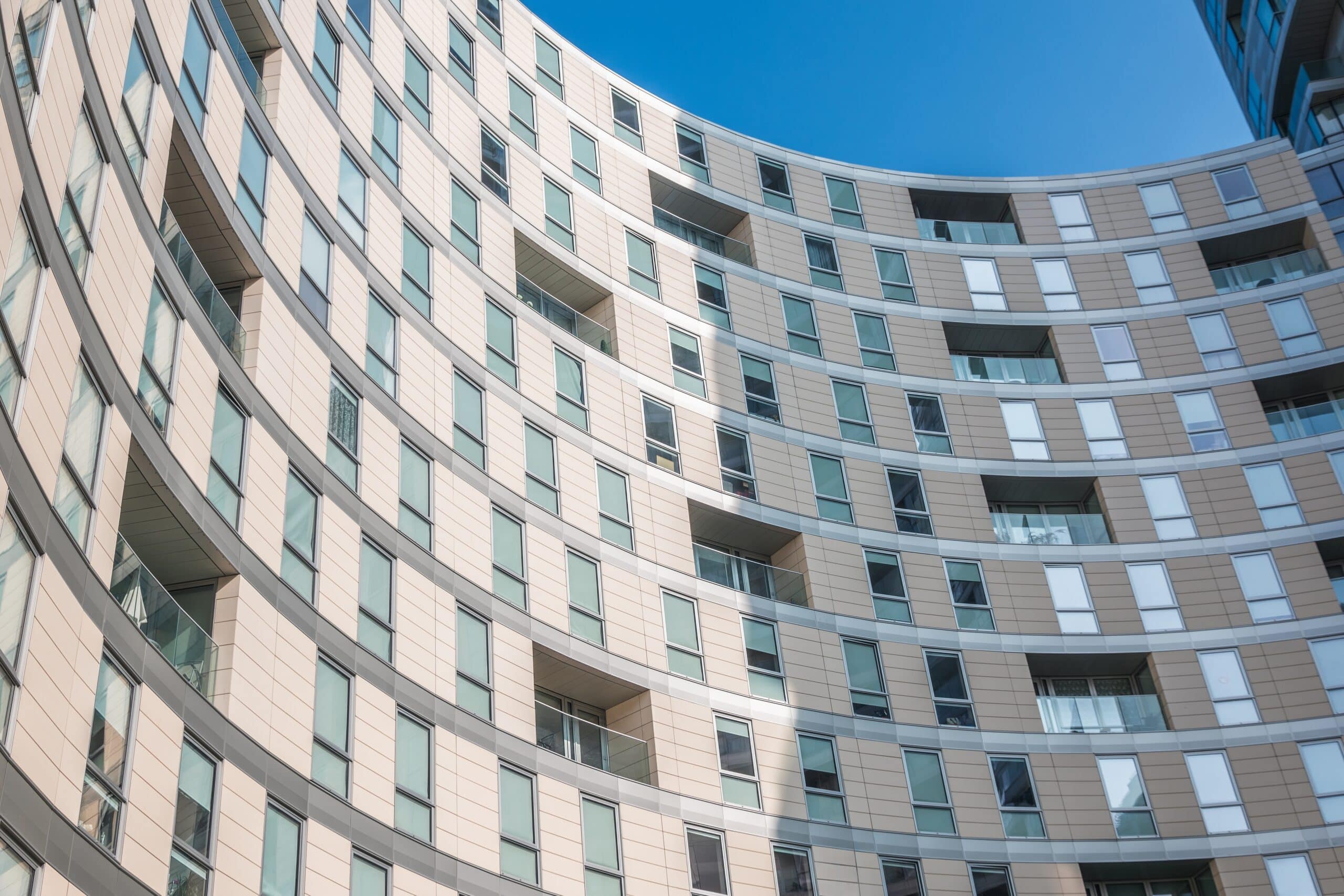
Many blocks of flats across the country are still living through a period of cladding remediation. While new, safer external wall systems are due for or are mid-installation, residents often continue to live in the building under interim safety measures.
These arrangements can help manage risk while long-term work is completed, but they also mean daily life may feel different. It is vital for leaseholders to understand what their particular measures mean for them day-to-day, and how to check that they are being properly managed.
What Waking Watch and Temporary Alarms Mean for Residents
In buildings where cladding or external-wall defects make the original “stay-put” fire-evacuation strategy unsafe, the building’s fire policy is often changed to “simultaneous evacuation.” Because many of these buildings lack a full, common fire alarm system, a waking watch becomes a temporary safety measure.
Under this system, trained wardens patrol the internal communal areas and exterior perimeters 24 hours a day, 7 days a week, looking out for smoke, fire or other hazards. Their role is to detect fire early, raise the alarm and guide residents to evacuate as needed.
Sometimes a temporary fire-alarm system can be installed instead of (or alongside) the waking watch. This may involve smoke or heat detectors in flats or common areas and communal sounders.
For residents, this means being prepared to evacuate immediately if an alarm or alert is raised. Personal Emergency Evacuation Plans (PEEPs) may also be needed, particularly for those with mobility issues or additional support needs.
Daily life may feel more unsettled. There may be frequent patrolling staff, and you may see contractors or fire-safety signage on site. Evacuation drills may occur, and in some cases, temporary alarms may trigger more sensitively. In this case, residents should remain alert but not panic over occasional false alarms.
Why These Interim Measures Are in Place
After the Grenfell tragedy of 2017, the risks posed by unsafe cladding and combustible external walls became very apparent. As many blocks were found to require remediation, interim measures became necessary to preserve resident safety while permanent fixes are delivered.
Neither waking watch nor temporary alarms are intended as long-term solutions. The preferred, safer approach is to install a compliant common-alarm system and complete the full remediation as soon as possible. Nonetheless, the reality is that many blocks remain in limbo.
What Should Leaseholders Be Checking?
If you live in a building under cladding remediation, it makes sense to verify that your interim fire-safety measures are not just a formality but are being managed diligently. Here’s what to look for:
- Clear documentation: Ask for a copy of the block’s current fire-safety plan. It should show whether a waking watch or temporary alarm is in place, the reasoning behind it, and what evacuation strategy is being used.
- Staff and patrol records: Waking-watch services must be run by trained personnel. There should be a log of patrols, times and any incidents, plus proof of training, especially if staff are replacing a reliable alarm system.
- Alarm system installation status: If a temporary alarm was promised, check that it is installed, tested and maintained.
- Evacuation planning for residents: A building should have written evacuation procedures, including special arrangements for residents with mobility issues or disabilities. You should know your assembly point and how the alarm or waking watch works.
- Speed of the remediation programme: The longer the interim measures last, the greater the risk that complacency sets in. Ask for a realistic schedule or timeline for remediation, or at least for installation of a permanent fire-alarm system. Request regular updates.
- Communication with residents: You should receive clear information about why the measures are in place, what they involve, and what residents are expected to do. Lack of communication may signal poor management.
If you find that any of these elements are missing or poorly managed, raise the issue with your landlord, managing agent or the building’s responsible person. Fire-safety regulators expect interim measures to be properly maintained, and leaseholders have a right to insist on transparency and compliance.
Interim Safety Limits
It is important to understand that waking watch and temporary alarms do not eliminate risk. They aim to manage it until the building is permanently remedied.
Waking-watch wardens cannot guarantee early detection in every scenario. They cannot be everywhere at once. In larger or more complex blocks, delays in discovery or alerting can compromise evacuation safety.
Similarly, temporary alarms may be simpler or less comprehensive than full, compliant detection systems, and might rely on fewer detectors, lack automatic sprinklers or smoke-control ventilation.
However, when properly managed and rigorously maintained, interim measures can significantly lower risk compared with doing nothing or relying on a flawed “stay-put” strategy in a building with dangerous cladding. Until remediation is complete, they remain essential.
The Role of Leaseholders and Community Vigilance
Residents have a vital role to play in staying safe. Smoke alarms within flats should be tested regularly. Block corridors, stairwells and escape routes should remain clear. Residents should report any concerns (blocked fire-escape doors, unsafe behaviour, faulty fire-alarms or missing patrols) to the responsible person immediately.
If the block uses a waking watch, it helps to carry out a personal check, especially during unusual hours or when alarms sound. Knowing neighbours, sharing information and acting quickly can make a real difference.
Community vigilance also helps hold building owners and managers accountable, ensuring that interim safety remains more than a box-ticking exercise, but a real commitment to resident protection.
