

Close Menu
Flat Living
    Facebook X (Twitter) Instagram
    • Home
    • About Us
    • Flat Living Sponsorship
    • Get In Touch
    • Directory
    • Subscribe
    LinkedIn Facebook X (Twitter) Instagram
    Flat Living
    • Block Management
      • Manage Your Block
        • Self Manage
        • Using a Managing Agent
        • Right to Manage
        • Forming a RMC
        • Managing Listed Flats
        • Communal Areas
      • Lease
        • About Your Lease
        • Buying Your Freehold
        • Extending Your Lease
      • Service Charges
        • About Service Charges
        • Service Charge Accounting
        • Collections and Arrears
        • Section 20
      • Health & Safety
        • Asbestos – Air – Water
        • Employing Contractors
        • Fire Protection
        • Fire Regulation
        • Health & Safety Law
      • Insurance
        • Buying Insurance for Your Block
        • Insurance Risk Management
        • Reinstatement Cost Assessment
        • Insurance for Communal Areas
        • Water Damage Prevention
        • Insurance for Buy to Let Landlords
        • Directors & Officers Liability Insurance
        • Making a Claim
      • Disputes
        • Landlord Disputes
        • Neighbour Disputes
        • Property Disputes
      • Major Works
        • About Major Works
        • Party Walls and Neighbour Matters
        • Section 20
      • Cleaning & Maintenance
        • Cleaning
        • Grounds
        • Maintenance
      • Communal Facilities
        • Lifts
        • EV Charging
        • Door Access and Gates
        • Heating & Utilities
        • Lighting
        • TV and Telecoms
      • Emergencies
        • Break-Ins
        • Lift
        • Out of Hours
        • Roof
        • Water
      • Software
      • Case Law
      • Customer Service & Marketing
      • FAQ
    • Leaseholders
      • Manage Your Block
        • Self Manage
        • Using a Managing Agent
        • Right to Manage
        • Forming a RMC
        • Managing Listed Flats
        • Communal Areas
      • Lease
        • About Your Lease
        • Buying Your Freehold
        • Extending Your Lease
      • Service Charges
        • About Service Charges
        • Collections and Arrears
        • Service Charge Accounting
        • Section 20
      • Disputes
        • Landlord Disputes
        • Neighbour Disputes
        • Property Disputes
      • Major Works
        • About Major Works
        • Party Walls and Neighbour Matters
        • Section 20
      • Communal Facilities
        • Lifts
        • EV Charging
        • Door Access and Gates
        • Heating & Utilities
        • Lighting
        • TV and Telecoms
      • Software
      • Landlords
        • Buying a Flat
        • Letting a Flat
        • Selling a Flat
      • Emergencies
        • Break-Ins
        • Lift
        • Out of Hours
        • Roof
        • Water
      • FAQ
    • Lifestyle
    • News
      • Industry News
      • Interviews
      • Opinion
      • Jobs
      • Flat Living Back Issues
    • Events, Training and Jobs
      • Events
      • Training
      • Jobs
    • Block Services
      • Flat Living Directory
    • Industry Associations
      • ARMA
      • ARHM
      • ALEP
      • FPRA
      • IRPM
      • Leasehold Advisory Service
      • Property Redress Scheme
      • National Leasehold Group
      • RICS
      • The Property Ombudsman
    Flat Living
    Home » A More Proactive Approach to Managing Risk in Communal Play Areas
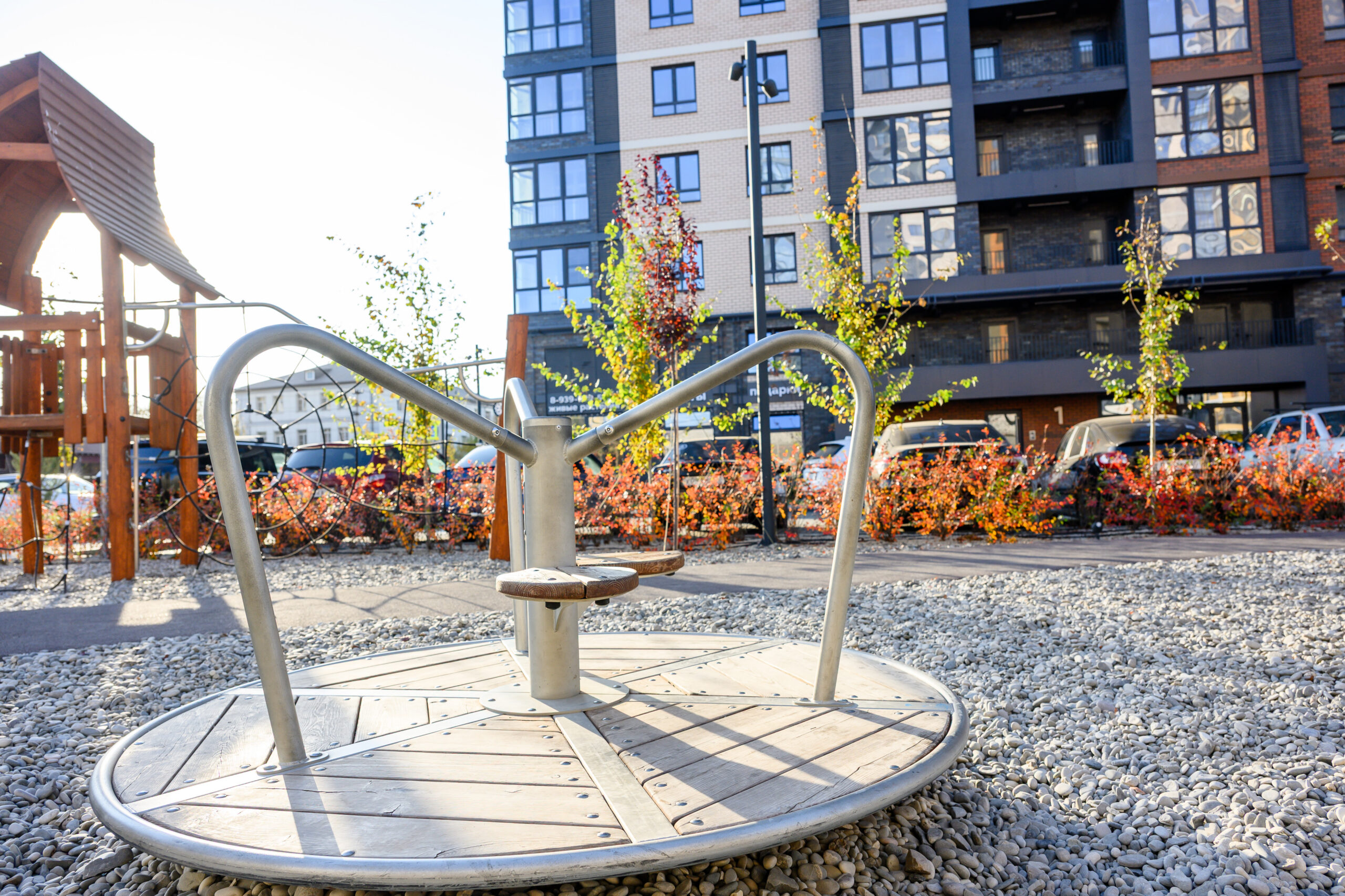
    A metal merry-go-round sits on gravel in a playground, surrounded by colorful plants and a modern apartment building in the background

    A More Proactive Approach to Managing Risk in Communal Play Areas

    0
    By Innovus on March 30, 2026 Communal Areas, Communal Facilities, Industry News, News

    By Richard Thwaites, Director of Building Safety & Compliance, Innovus

    In many residential developments, play areas are seen as a simple amenity, and something that adds value for families and improves the feel of a scheme.

    But in practice, they bring a level of responsibility that is often underestimated.

    According to the Royal Society for the Prevention of Accidents (RoSPA), there are an estimated 40,000 playground accidents each year in the UK resulting in hospital visits. While many of these are minor and part of normal play, they highlight an important point: risk in play areas is constant and needs to be actively managed.

    Why Play Areas Are Often Higher Risk Than They Appear

    What we often see in residential settings is that play areas don’t always get the same attention as other shared spaces. They’re visible, well-used and, on the surface, seem safe, so it’s easy to assume everything is fine.

    In reality, a few everyday factors can increase the level of risk:

    • Used all the time, often without supervision – play areas get daily use, and there isn’t always someone keeping an eye on how they’re being used.
    • Children don’t see risk the same way – they’re less likely to spot hazards or think about consequences.
    • Play can be unpredictable – climbing, jumping and pushing boundaries is all part of it.
    • Things wear out over time – weather, regular use and the occasional damage all take their toll.

    Because of this, issues like loose fittings, rust or worn safety surfaces can build up gradually. They’re not always obvious at a glance, but they can still increase the risk if they’re not picked up early.

    The Problem With A Reactive Approach

    A common pattern is that play areas are only reviewed when something goes wrong — following a complaint, visible damage or an incident.

    By that point, the risk has already materialised.

    From a legal perspective, the position is clear. Under the Occupiers’ Liability Acts of 1957 and 1984, those responsible for communal areas must take reasonable steps to keep visitors safe. This duty is higher where children are concerned, and importantly, it is about acting early rather than responding after an incident.

    Why Regular Inspection Is Key

    In practice, managing play area risk doesn’t need to be complex. It comes down to having a clear and consistent approach to inspection and maintenance.

    Regular inspections provide visibility of condition. They help identify early signs of deterioration and highlight where equipment may no longer be safe to use.

    This allows:

    • Issues to be addressed before they escalate.
    • Maintenance to be planned rather than reactive.
    • Play areas to remain open and usable for residents.

    What “Competent Inspection” Really Means

    A basic visual check has its place, but it won’t always identify the types of defects that present the greatest risk.

    A competent inspection involves:

    • Identifying structural and wear-related issues.
    • Assessing fall heights and surfacing performance.
    • Recognising entrapment and impact risks.
    • Determining when equipment should be repaired or taken out of use.

    While managing agents and estate teams coordinate maintenance, identifying safety-critical defects usually requires specialist knowledge and experience.

    Why Records Matter

    Inspection records are a key part of managing risk, not just good practice.

    In the event of an incident, they are often one of the first things requested by insurers or legal representatives. Clear, documented evidence of inspection and maintenance helps demonstrate that risks have been actively considered and managed.

    Without this, the consequences can be significant:

    • Residents can be injured.
    • Legal claims can arise.
    • Insurance exposure can increase.
    • Reputational damage can occur.

    A Practical Approach For Residential Developments

    Managing risk in play areas isn’t about removing the value of play. Children need space to explore and develop confidence; however, this must be supported by a safe and well-maintained environment.

    The aim is to ensure that any hazards are identified early and addressed, so that play areas remain safe for everyday use.

    In simple terms, that means:

    • Carrying out routine visual checks.
    • Scheduling periodic inspections.
    • Arranging independent annual inspections where appropriate.
    • Addressing issues early.
    • Maintaining clear records.

    Getting The Balance Right

    When play areas are managed proactively, they can remain both safe and accessible — supporting residents while giving confidence that risks are being properly managed.

    Ultimately, these spaces should be treated with the same level of attention as any other communal asset.

    At Innovus, we see this proactive approach helping clients maintain safer, more reliable play spaces across residential developments.


    Photo of Richard Thwaites

    Richard Thwaites is Director of Building Safety & Compliance at Innovus, working with managing agents, freeholders and clients across residential and social housing settings. He specialises in practical, risk-led approaches to safety, supporting organisations to identify and manage compliance and maintain safe environments for residents and communities.

    building safety communal areas communal facilities industry news News play areas
    Share. Facebook Twitter Pinterest LinkedIn Tumblr Email
    Innovus
    • Website

    We deliver market-leading solutions and expertise to the property sector. Our decades of experience mean we fully understand the complexities of the property sector and can offer simple solutions, tailored to match your needs. Innovus

    Related Posts

    What is a PEEP and Who Needs One?

    Driving Community Pride Through Sustainable Property Management

    What Lies Beneath: Why Lifts Are Like Icebergs

    Comments are closed.

    You are here:

    Home → News → Industry News

    JB Leitch advertising banner
    Latest Articles
    March 30, 2026

    What is a PEEP and Who Needs One?

    March 30, 2026

    A More Proactive Approach to Managing Risk in Communal Play Areas

    March 30, 2026

    Driving Community Pride Through Sustainable Property Management

    March 30, 2026

    What Lies Beneath: Why Lifts Are Like Icebergs

    • Manage Your Block
    • Lease
    • Health & Safety
    • Insurance
    • Disputes
    • Major Works
    • Cleaning and Maintenance
    • Communal Facilities
    • Software
    • Landlords
    • Events, Training and Jobs
    • Customer Service & Marketing
    • Case Law
    • News
    • Interviews
    • Opinion
    About Flat Living

    Flat Living is a trading name of www.flat-living.co.uk Ltd.  Registered Office: 3rd Floor, St. David's Court, Union Street, Wolverhampton, WV1 3JE.

    Registered in England and Wales CRN No. 06738048.

    Quick Site Links
    • About Us
    • Contact Us
    • Industry Associations
    • Flat Living Sponsorship
    Search This Website
    • Home
    • Get In Touch
    • Cookie Policy
    • Privacy Notice

    Type above and press Enter to search. Press Esc to cancel.