


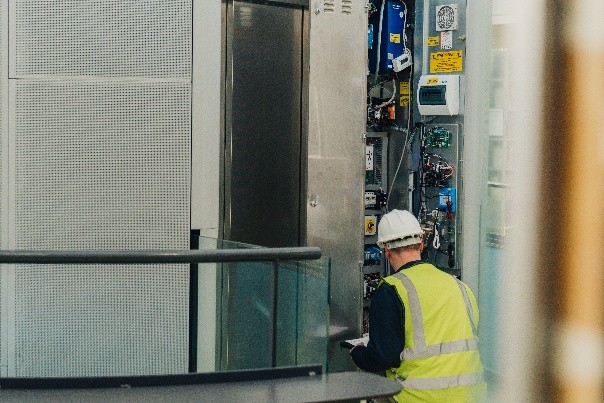
This month in Flat-Living Magazine; we are focusing on some maintenance orientated FAQs we often get asked of property managers and clients:
Q: We’re looking to put a new maintenance contract in place for our lift. What level of cover should we obtain?
A: For lift owners and operators, ensuring that lifting equipment is maintained correctly is an important legal and operational responsibility. Under the Lifting Operations and Lifting Equipment Regulations 1998 (LOLER) and the Health and Safety at Work etc. Act 1974, employers and those responsible for lifting equipment must ensure that lifts are properly maintained and safe to use.
LOLER – HSE guidance
Health and Safety at Work etc. Act 1974 – HSE guidance
The frequency of programmed maintenance will depend on several factors, including the type of lift, the number of floors it serves, and the level and nature of use it experiences.
When choosing a maintenance company and deciding what level of cover is appropriate, it is important to remember that servicing should be about preventative maintenance. The aim should be to identify deterioration in components before they fail, helping to provide a reliable lift service and reduce running costs over the medium and long term.
The Three Main Levels of Lift Maintenance Cover
Generally, there are three levels of maintenance cover available within the UK lift industry:
Basic Maintenance
Basic maintenance provides cover for the routine maintenance of the lift equipment. It is often described as an “oil and grease” contract.
Under this type of agreement, the lift company should service the various components of the lift installation. However, breakdowns, replacement parts and labour are often excluded and charged separately by the contractor.
While this can appear to be the lower-cost option, it is important to understand exactly what is and is not included before entering into an agreement.
Intermediate Maintenance
As the name suggests, intermediate cover sits between basic and comprehensive maintenance.
This level of cover should generally include breakdown attendances, usually during normal working hours, provided that the breakdown has not resulted from misuse or damage to the lift equipment.
Some intermediate contracts may also include certain perishable or wear-and-tear items, such as door rollers and shoes. However, this will depend entirely on the terms and conditions agreed with the maintenance provider.
It is therefore important to establish precisely which components and services are included within the contract.
Comprehensive Maintenance
Comprehensive cover should include all routine maintenance, breakdown attendances and the parts required to maintain and repair the lift throughout the duration of the contract.
However, the word “comprehensive” should not automatically be taken to mean that absolutely everything is covered.
There can be significant exclusions within comprehensive agreements. High-cost items such as controllers, machines and door operators, for example, may be excluded or subject to additional charges.
For this reason, it is essential to carefully review the contract and its exclusions before signing.
In many circumstances, comprehensive maintenance can offer better long-term value, even though the annual cost may be considerably higher, sometimes around twice the cost of a basic agreement. This is because a comprehensive arrangement can encourage a greater focus on preventative maintenance and resolving breakdowns on a first-fix basis.
Ultimately; however, the right level of cover will depend on the lift, its usage, its age and the specific terms offered by the contractor.
Am I Receiving the Correct Level of Maintenance?
Q: I’m not an expert in the lift industry. How can I tell whether my maintenance company is doing the job correctly?
A: Good maintenance, supported by appropriate technical expertise, is essential to providing a reliable lift service.
Lift designs vary considerably, and different types of equipment require different levels of technical knowledge and expertise to maintain correctly.
An unreliable lift may be affected by a number of factors. These can include the age of the equipment, the obsolescence or availability of replacement parts, inadequate workmanship, incorrect adjustment levels or simply poor-quality maintenance.
However, reliability should not be measured solely by the number of breakdowns.
Other warning signs such as poor levelling, noisy operation and changes in performance can indicate that a lift is not correctly adjusted or maintained. Left unresolved, relatively minor issues can potentially develop into more significant problems.
Simple Signs to Look Out For
There are several straightforward warning signs that lift owners and operators can look out for:
- The lift stops too high or too low at landing floors.
- The doors repeatedly open or close before the lift begins travelling.
- Scrapes, knocks or bangs are heard while the lift travels through the lift well.
- Excessive noise or heat is coming from the machine room or machinery space.
- The lift displays the incorrect floor designation when called.
Behind many of these issues there can be relatively simple causes that require only minor adjustment to rectify, provided that the problem is diagnosed correctly in the first place.
Regular preventative maintenance should therefore be combined with thorough examinations by a competent person. These two activities should not be confused with one another, even though there are some areas where they overlap.
LOLER Thorough Examinations
The Lifting Operations and Lifting Equipment Regulations 1998 (LOLER) introduced requirements relating to the safe provision and use of lifting equipment.
Under Regulation 9 of LOLER, lifts provided for use in work activities must be thoroughly examined by a competent person at regular intervals.
Q: Who is the Competent Person?
A: Depending on the circumstances, a competent person may include:
- A lift insurance inspector.
- A client-appointed person responsible for ensuring compliance with LOLER 1998 and the Health and Safety at Work etc. Act 1974, which is more commonly seen within larger organisations.
- A lift engineer, where they determine that a particular component requires further in-depth examination.
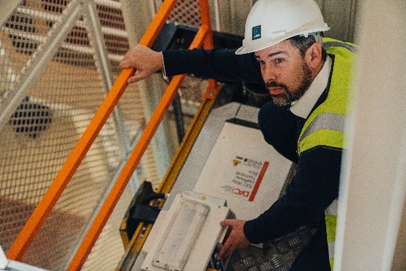
A thorough examination is a systematic and detailed examination of the lift and its associated equipment. Its purpose is to identify defects that are, or could potentially become, dangerous.
Where defects are identified, the competent person should report them to the duty holder and, where appropriate, the relevant enforcing authority, such as the Health and Safety Executive (HSE) or the local authority.
The competent person is legally required to provide a written and signed report identifying any defects that need to be addressed. The report should provide details of any repair, renewal or alteration required to remedy the defect, together with a date by which the work should be undertaken.
Q: How Do I Know Whether Identified Defects Are Being Addressed?
A: Once defects have been identified through a thorough examination, it is important to obtain written confirmation that the required remedial work has been completed, particularly where the report specifies a deadline.
Depending on the level of maintenance contract in place, many items identified during a LOLER examination can potentially be addressed during the next scheduled maintenance visit.
On other occasions, however, the lift contractor may need to provide a quotation for work that falls outside the agreed contractual scope.
This is often where the process can break down. A client may be reluctant to authorise additional expenditure, which can result in the same items appearing repeatedly on subsequent examination reports.
One of the key considerations for a lift owner or operator is therefore understanding which remedial works are mandatory and which are recommendations that are not legally enforceable.
Having a clear understanding of the distinction can help clients make informed decisions about their lift maintenance and ensure that safety-critical issues are dealt with appropriately.
Independent Lift Maintenance Audits
At ARDENT Lift Consultancy, we can assist clients with a wide range of lift maintenance issues through independent maintenance audits.
Our audits can assess:
- The quality of maintenance workmanship.
- Equipment adjustment levels.
- General cleanliness.
- Compliance with current health and safety legislation.
- Maintenance and other documentation held on site.
- Equipment performance and reliability.
- The overall condition and life expectancy of the lift.
The objective is to help ensure that lift equipment is being maintained appropriately and that its performance, reliability and life expectancy are maximised in a cost–effective manner.
Where appropriate, we can also provide alternative solutions to help clients address maintenance, compliance or equipment-related issues.
If you have concerns about the quality of maintenance your lift is receiving, are reviewing an existing maintenance contract, or are considering a new level of cover, ARDENT Lift Consultancy is always available for a friendly, no-obligation conversation.