


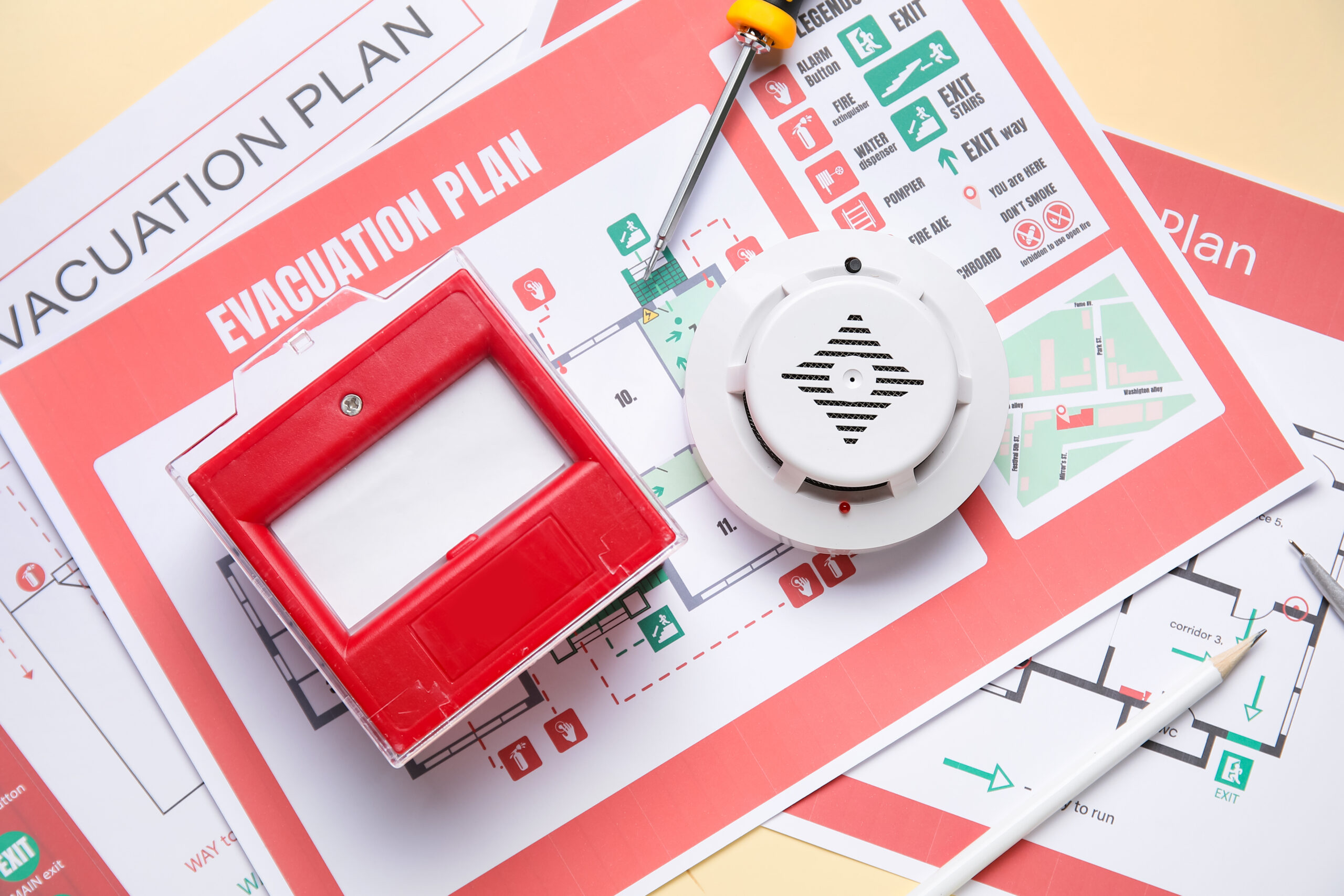
In recent years, there’s been growing awareness across the property sector of the need to support residents who may struggle to evacuate safely in an emergency. As fire safety culture evolves, Personal Emergency Evacuation Plans (PEEPs) have become a point of discussion and sometimes confusion.
The Fire Safety (Residential Evacuation Plans) (England) Regulations 2025 come into place from April 6th this year, so it’s important that property managers understand what their responsibilities will be.
This article explains what Residential PEEPs are, who they’re for and how property professionals can approach them practically and proportionately.
What Is a PEEP?
A Personal Emergency Evacuation Plan, or PEEP, is a written plan that explains how a specific individual would be supported to evacuate a building safely during an emergency.
This concept has been in place for commercial properties for quite some time, namely in the Health and Safety at Work Act 1974, Equality Act 2010 and Disability Discrimination Act 1995, which all require employers to take adequate steps to protect the wellbeing of their staff.
The plan is tailored to the person’s particular needs. It may be required for anyone who needs aid or assistance to evacuate a building.
The purpose is not to create general building-wide protocols, but to think about how that individual would leave safely if an alarm sounded or a fire broke out. The PEEP outlines any assistance required, the route they would take and any equipment (such as evacuation chairs) that might be needed.
Who Might Need a PEEP?
PEEPs are not for everyone and they are not designed to categorise residents. They exist to ensure people with additional needs aren’t put at risk because their building’s evacuation strategy may prove challenging for them.
A resident might benefit from a PEEP if they use a wheelchair, have a heart or breathing condition that limits mobility, live with a sensory impairment like sight or hearing loss, or face cognitive challenges that affect their ability to process instructions in an emergency. People with temporary conditions such as recovery from surgery or late-stage pregnancy may also need a Residential PEEP for a period of time.
Importantly, not all disabilities are visible. It’s essential for managing agents to create a safe space for residents to disclose support needs if they choose to, without assuming or making decisions on their behalf.
PEEPs in Residential Buildings
PEEPs are well established in workplaces, hospitals and public buildings. In residential settings, however, legislation has been slower to evolve.
The Regulatory Reform (Fire Safety) Order 2005 applies to common areas of residential buildings. It requires duty holders to ensure the fire risk assessment considers the needs of all relevant persons.
Alongside this, the Fire Safety (Residential Evacuation Plans) (England) Regulations 2025 come into place from April 6th, 2026, requiring duty holders to take “reasonable steps” to support safe evacuation.
This process includes a suite of measures:
- The responsible person (typically the building owner or manager) identifying residents who need Residential PEEPs.
- A person-centred fire risk assessment – a conversation between the responsible person and the resident, if one is requested by the resident – to understand their particular risks and identify how their fire safety and evacuation can be improved.
- An emergency evacuation statement of what the resident should do in the event of a fire (if agreed between the responsible person and the resident).
- Information for the Fire and Rescue Authority to help inform any operational response and in case they need to undertake evacuation (but only if the resident explicitly agrees to that information being shared).
- An ongoing duty to review the person-centred fire risk assessment/emergency evacuation statement and the building emergency evacuation plan.
Fire risk assessments must consider whether any residents need assistance and ignoring the issue altogether is not a reasonable position.
A building with a ‘stay put’ strategy may not require general evacuation plans, but if a resident in a third-floor flat cannot self-evacuate, there still needs to be a considered approach. The more complex the building is, the stronger the expectation that these factors are reviewed, for example, a building over 18m or a building over 11m with a Simultaneous Evacuation strategy.
Who Is Responsible for Residential PEEPs?
In residential buildings, the responsibility sits with the Responsible Person. That person must ensure fire safety risks are assessed, including those relating to residents who might need help evacuating.
That said, the process relies on engagement from residents. No one can be forced to share medical or personal information. Property managers should invite residents to declare if they would like a PEEP and explain how the information will be used and stored.
Managing agents play a key role in coordinating this communication, liaising with residents, recording responses and updating plans when needed. A resident who didn’t need a PEEP last year may need one today. Keeping engagement open and revisiting the topic periodically is essential.
How Should Property Managers Approach PEEPs?
Sensitivity is key. Asking someone if they can evacuate independently requires care, respect and clear communication. It’s not about labelling people, but about ensuring no one is overlooked in the building’s fire safety planning.
Start by providing accessible information. Let residents know that they can request support or declare any needs they feel are relevant. Make it clear this is voluntary and treated confidentially.
Avoid assumptions. Not every older resident needs help and not every wheelchair user needs a PEEP if they live on the ground floor with direct access.
Where a resident declines to engage, make a note of the offer and response. If someone does request a PEEP, ensure the plan aligns with the building’s fire strategy.
Common Misunderstandings About PEEPs
There’s a lot of confusion around PEEPs in the residential sector.
One misconception is that they only apply in high-rise buildings. In truth, evacuation challenges can exist in any multi-occupancy building, regardless of height.
Some believe that if a resident refuses to engage, there’s nothing more to be done. While it’s true that participation is voluntary, duty holders should still document the offer, any communication made and how the building’s overall fire strategy supports safety to evidence that reasonable measures were taken.
And finally, PEEPs aren’t a one-off task. They should be reviewed regularly and updated when the building, fire strategy, or resident’s circumstances change.
Planning for People, Not Just Buildings
Fire safety is about more than smoke alarms and compartmentation. It’s about ensuring every resident has the opportunity to be safe and can evacuate promptly, should this be required.
Residential PEEPs are not about adding bureaucracy or creating unrealistic expectations. They’re about awareness, communication and inclusion. As a property manager or duty holder, you don’t need to have all the answers, but you do need to ask the right questions and take reasonable steps.
At 4site, we support our clients through this process with proportionate, respectful guidance. Whether it’s advising on resident communications, reviewing fire strategies, or embedding safety into everyday operations, we’re here to help you protect the people behind the front doors.